
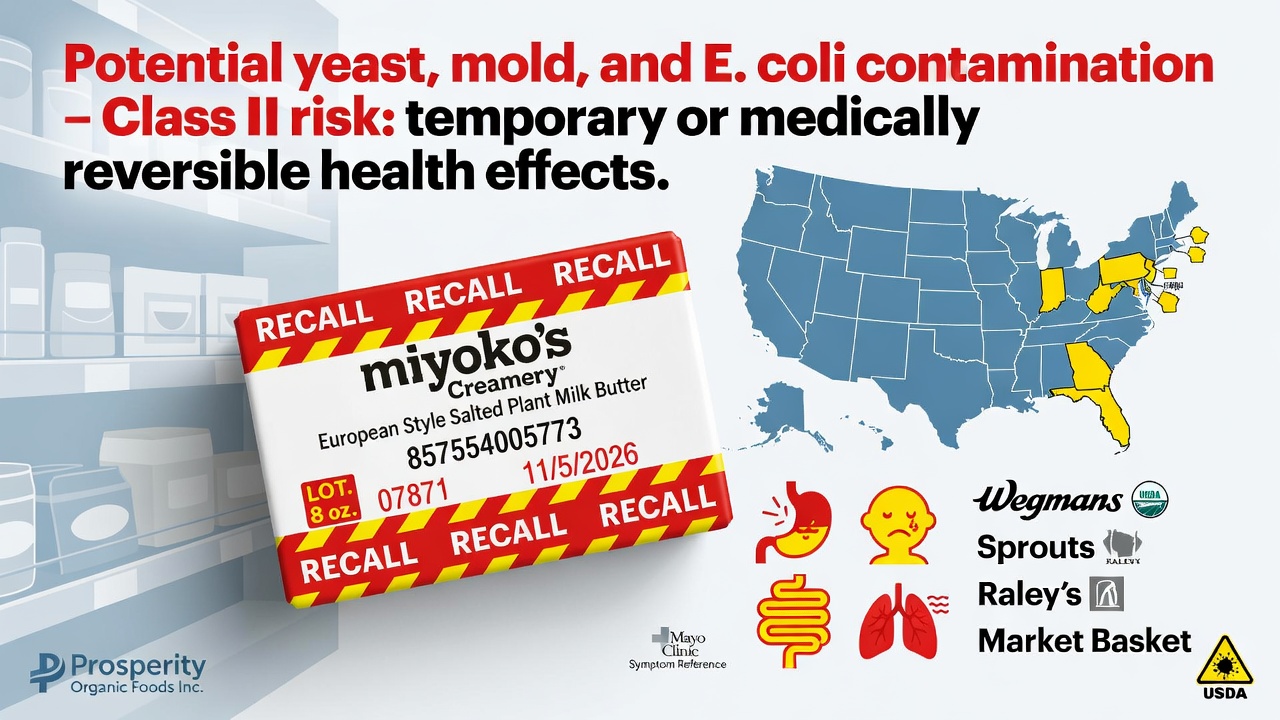
The FDA has classified a recall of Miyoko's Creamery European Style Salted Plant Milk Butter as a Class II risk due to potential yeast, mold, and E. coli contamination. The recall, voluntarily initiated by manufacturer Prosperity Organic Foods Inc. in September, affects a single lot distributed to retailers across ten states.
What triggered the recall
Prosperity Organic Foods Inc. began pulling the product on September 11 after internal testing flagged elevated yeast levels that failed to meet quality standards. A follow-up notice on September 17 expanded the concern to include possible E. coli contamination. The FDA formally assigned the recall a Class II designation on October 23, a category indicating the product may cause temporary or medically reversible health effects, though the likelihood of serious harm is considered low.
Retail chains including Wegmans, Sprouts, Raley's, and Market Basket notified customers directly in early September, even before the FDA's official classification was finalized.
Which states and products are affected
According to the FDA, the recalled butter was distributed to Connecticut, Florida, Georgia, Illinois, Indiana, Iowa, Maryland, New Hampshire, New Jersey, and Wisconsin. Consumers can identify the affected item by these details:
- Product: Miyoko's Creamery European Style Salted Plant Milk Butter (8 oz.)
- UPC: 857554005773
- Lot number: 07871
- Best-by date: 11/5/2026
Miyoko's has not posted a formal recall notice on its own website. However, the company responded to a customer inquiry on Facebook on October 26, stating that it "voluntarily pulled a very small number of products off the shelves out of an abundance of caution" in early September and that all potentially affected inventory has since been removed from stores.
Health risks and what to do
E. coli infections typically produce symptoms within three to four days of exposure, according to Mayo Clinic experts, including loose or bloody stools, stomach cramps, nausea, and vomiting. The FDA notes that certain foodborne molds and yeasts can also generate mycotoxins, compounds that pose additional health risks. The USDA adds that some molds may trigger allergic reactions or respiratory issues separate from toxin production.
Anyone who purchased the affected lot is advised to check the UPC and lot number before consuming it. Those who have already eaten the product and experience gastrointestinal symptoms should contact a healthcare provider for guidance.