
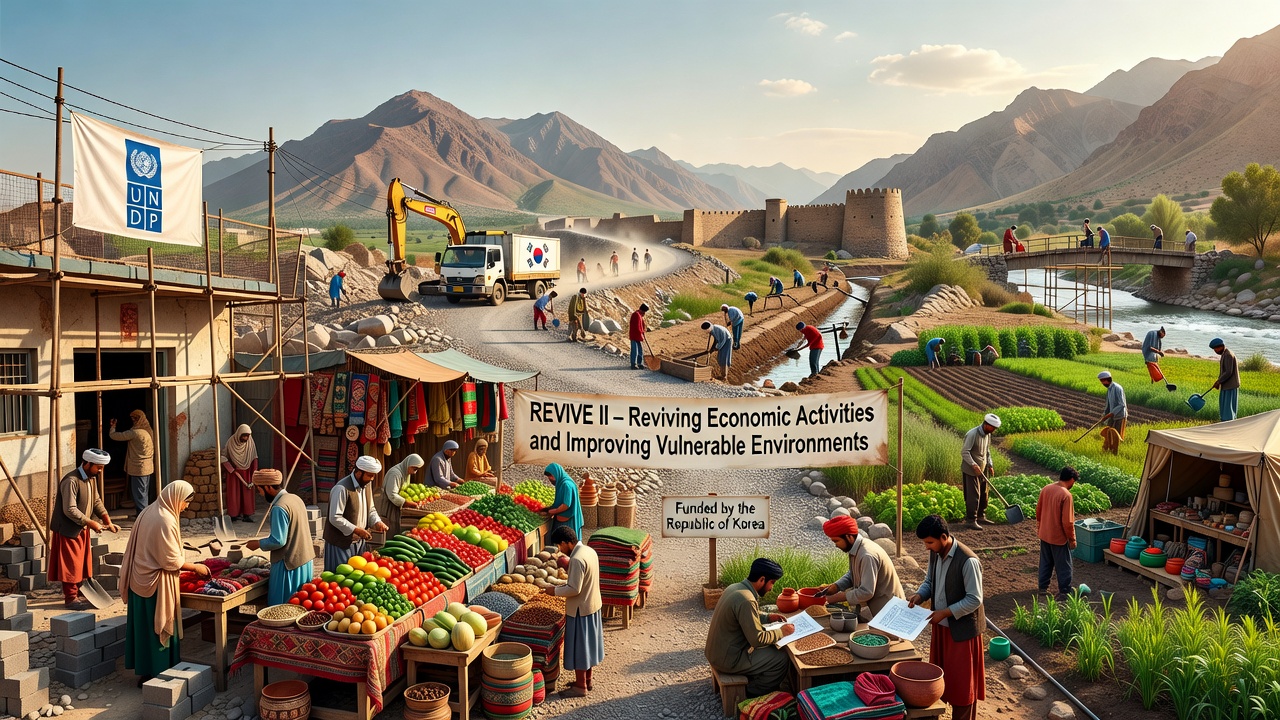
The United Nations Development Programme announced on Monday, October 26, that it is launching a new phase of economic recovery work in Afghanistan, funded with support from the Republic of Korea. The initiative, known as REVIVE II, expands on an earlier program and targets five provinces across the country.
What the program covers
REVIVE II stands for Reviving Economic Activities and Improving Vulnerable Environments. According to UNDP, the second phase will focus on four broad areas: strengthening household and community livelihoods, rebuilding social infrastructure, revitalizing local economic activity, and improving overall community resilience. The program is set to operate in Kabul, Paktia, Ghazni, Nangarhar and Kunar provinces, a mix of urban and rural areas that reflects varying economic and infrastructure needs across Afghanistan.
Building on an earlier phase
UNDP says REVIVE II builds directly on the results of the program's first phase, though the agency's announcement did not detail specific output figures, timelines or budget amounts for the new round of funding. The stated aim is to consolidate earlier recovery gains and further improve Afghanistan's economic conditions, which have remained fragile amid ongoing humanitarian and development challenges in the country.
Context and what remains unclear
Afghanistan has faced significant economic strain in recent years, with international agencies continuing to operate development and humanitarian programs despite constraints on direct government-to-government assistance. South Korea's backing of this UNDP-led effort reflects a pattern of international donors routing support for Afghan communities through UN agencies rather than through Afghanistan's governing authorities directly.
UNDP's statement did not specify the exact dollar value of the Republic of Korea's contribution, the program's duration, or measurable targets such as the number of households or jobs expected to benefit. Readers should treat these as open questions pending further detail from UNDP or the South Korean government. The announcement also did not address how the program coordinates with other international aid efforts already active in the same provinces.