
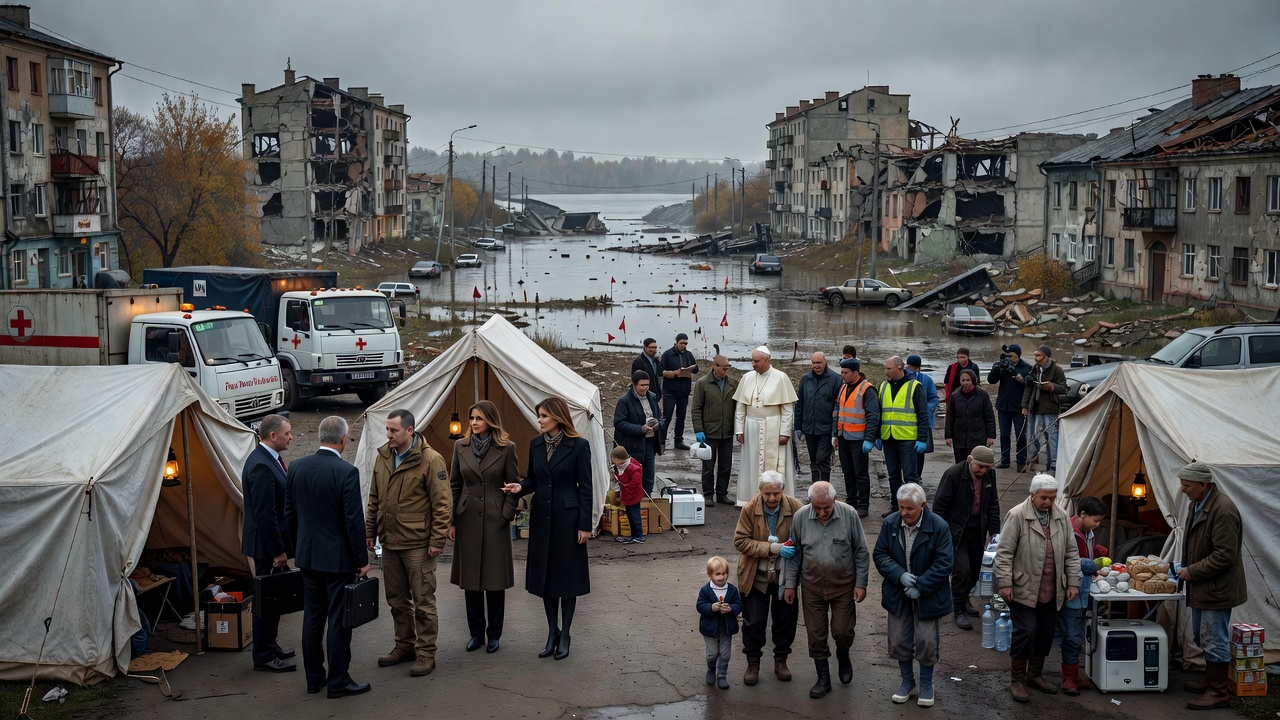
A limited, localized ceasefire covering the front-line Ukrainian city of Oleshky is set to take effect Oct. 29, according to an announcement from First Lady Melania Trump's office. The arrangement, negotiated with the first lady acting as an intermediary between Russian and Ukrainian officials, aims to pause fighting long enough to deliver humanitarian aid and evacuate remaining civilians, most of whom are elderly.
How the arrangement came together
According to the first lady's office, her team worked directly with leadership in both Russia and Ukraine to coordinate the terms, technical logistics and timing of the pause in hostilities. "The situation in Oleshky is dire," Trump said in a statement, adding that without the intervention, bringing aid into the city and evacuating elderly residents "would be impossible."
David Arakhamia, head of President Volodymyr Zelenskyy's party faction in Ukraine's Parliament, thanked both the first lady and Pope Leo XIV, who had also urged a ceasefire, for their roles in the effort. He said Ukraine's broader goal is to establish permanent humanitarian corridors for civilian evacuation and aid delivery. Kremlin spokesman Dmitri S. Peskov confirmed Russian forces were finalizing the timing of the pause and credited the first lady with making "a significant contribution" to the talks.
What the pause is meant to accomplish
Officials said the ceasefire would halt military activity in Oleshky to allow medical care, food and clean water to reach residents trapped by the fighting. Civilian, non-military representatives from both countries are expected to visit the city to assess needs and help coordinate evacuations to either Russia or Ukraine, depending on individual residents' preferences. The first lady's office said the media outlet Newsmax has been arranged to document the process, which officials say is intended to help ensure families' choices are respected.
Context: a city hollowed out by war
Oleshky sits in southern Ukraine, across the Dnipro River from Kherson, and has remained on the front line since Russia's full-scale invasion began in 2022. The city's pre-war population of roughly 24,000 has shrunk to an estimated 1,700 to 2,000 residents, including about 50 children. Its infrastructure has been battered both by combat and by flooding that followed the destruction of the Kakhovka Dam, leaving residents to contend with limited electricity, active landmines and ongoing military activity.
The ceasefire is described by all parties as localized and temporary, tied specifically to the humanitarian operation in Oleshky rather than a broader halt to the conflict. Its success will depend on whether Russian and Ukrainian forces honor the agreed-upon timing and scope once the operation begins.