
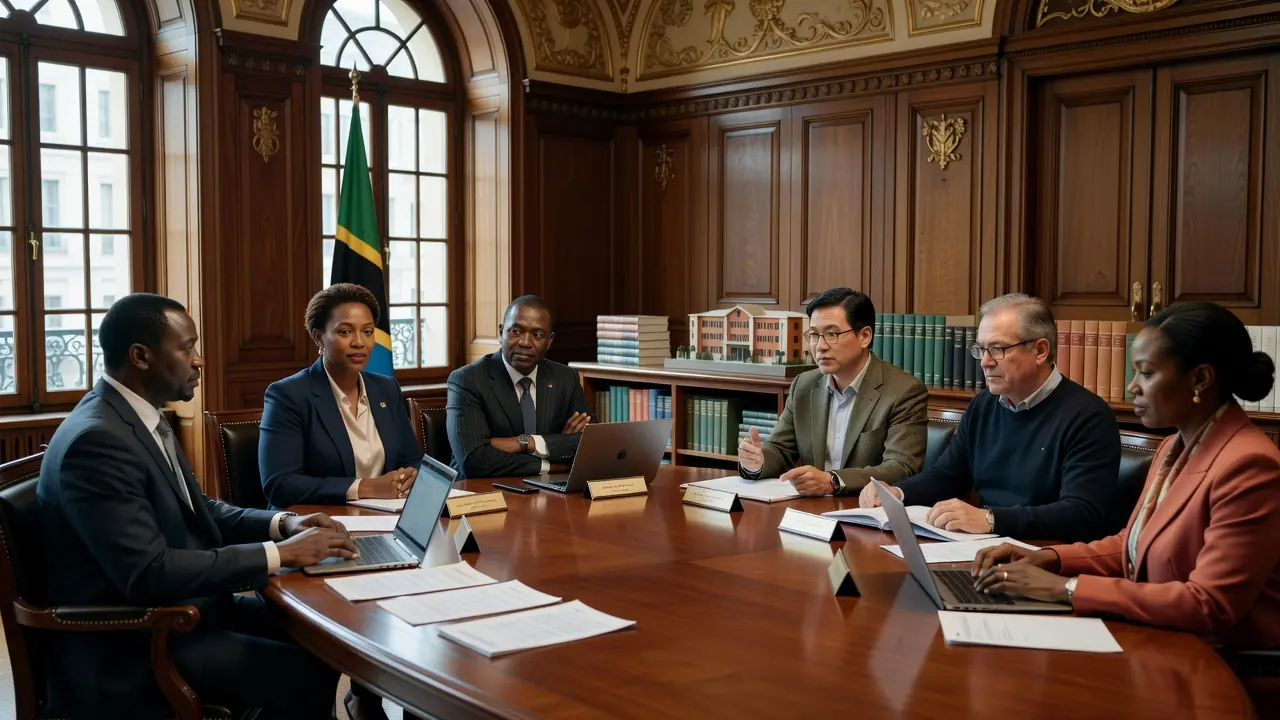
Officials from the Institute of Accountancy Arusha (IAA) in Tanzania met with senior UNESCO leadership in Paris on October 22, 2026, to discuss closer cooperation in education, research and professional training. The talks, held at UNESCO headquarters, centered on possible joint initiatives in teacher development and academic exchange rather than a finalized agreement.
Who took part in the Paris meeting
The IAA delegation was led by Dr. Mwamini Tulli, Chairperson of the Board of Trustees, and Professor Eliamani Sedoyeka, the institution's Rector. The visit was coordinated through the Tanzanian Embassy in France, with Ambassador Saidi Yakubu in attendance. On the UNESCO side, the delegation was received by Professor Qun Chen, Assistant Director-General for Education, along with Carlos Vargas-Tamez, Head of UNESCO's Teacher Development Section, and Maya Prince, who manages the organization's UNITWIN/UNESCO Chairs Programme.
What was discussed
Professor Sedoyeka described IAA's existing work training professionals in accounting, finance, business administration and information and communication technology, framing the meeting as part of a broader push to expand the institute's international academic partnerships. Professor Chen responded by signaling UNESCO's openness to collaboration, according to the account of the meeting. The parties identified several potential areas for cooperation, including:
- Teacher training and professional development programs
- Joint or coordinated research initiatives
- Establishment of a UNESCO Chair at IAA, a designation used to formalize academic partnerships between universities and UNESCO worldwide
What a UNESCO Chair would mean in practice
The UNITWIN/UNESCO Chairs Programme links individual institutions to UNESCO's global network, typically supporting knowledge-sharing, curriculum development and collaborative research with universities in other countries. If pursued, such a designation at IAA could give Tanzanian accounting, finance and ICT students and faculty structured access to international academic partners, though the scope, funding and timeline of any chair were not detailed in the discussions reported. No signed agreement, budget or implementation date was announced; the meeting appears to represent an early, exploratory stage in what both sides describe as a prospective strategic partnership.
Why this matters for professional training
For employers and students in East Africa's accounting and finance sectors, expanded international academic ties can translate into updated curricula, research opportunities and faculty exchange that align local training with global standards. However, the practical benefits depend on follow-through: formal partnership agreements, funding commitments and specific program design typically follow initial diplomatic and academic meetings of this kind before any classroom or research impact becomes evident.