
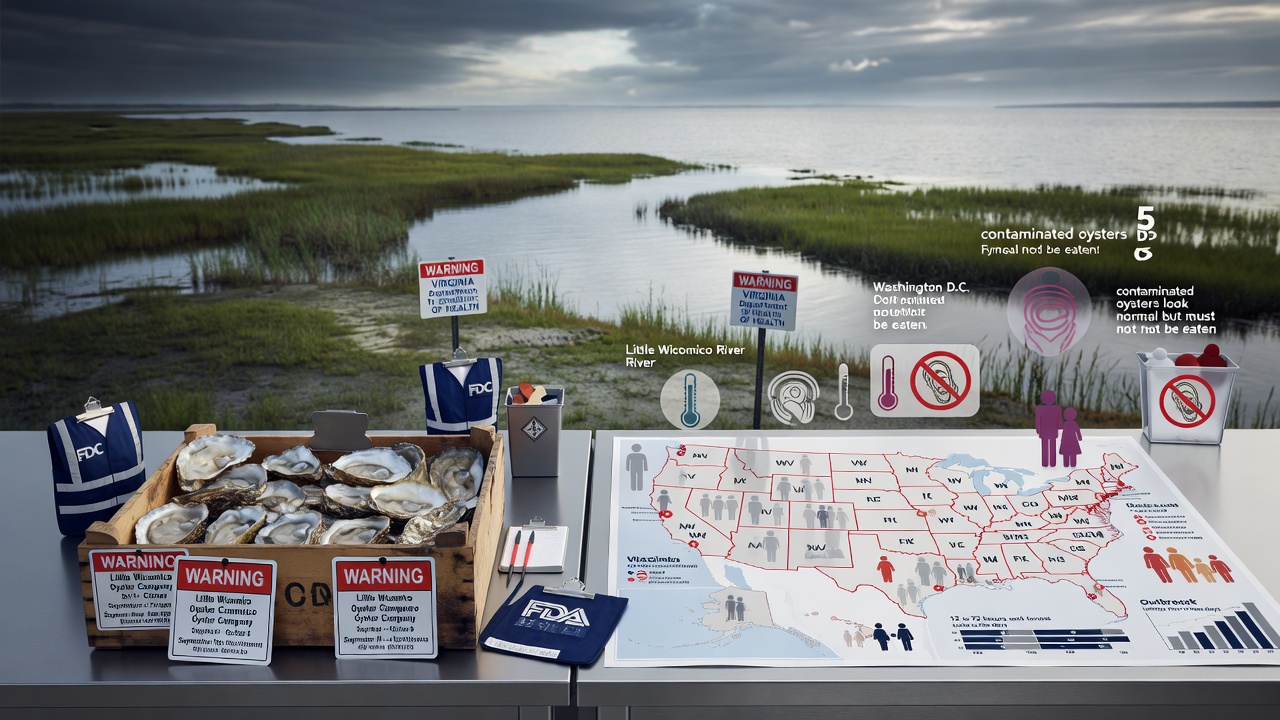
Federal health officials have recalled oysters harvested from Virginia's Little Wicomico River after a salmonella outbreak linked to the product sickened dozens of people in multiple states and Washington, D.C. The Centers for Disease Control and Prevention has confirmed 27 illnesses and five hospitalizations as of Monday, while the source operation has halted harvesting and state regulators closed the affected waterway.
What triggered the recall
The Little Wicomico Oyster Company, based in Virginia, harvested oysters from the Little Wicomico River between Sept. 18 and Oct. 8. Those oysters were subsequently distributed to restaurants and retailers across 15 states and the District of Columbia, including Maryland, California, Colorado, Connecticut, Florida, Georgia, Illinois, Missouri, North Carolina, New Jersey, Nevada, New York, Pennsylvania, Texas and Virginia. The river empties into the Chesapeake Bay near the Potomac River, close to the Virginia-Maryland border. The FDA has emphasized that oysters harvested from other parts of Virginia are not implicated in this recall.
Response from state and federal authorities
The Virginia Department of Health temporarily closed the Little Wicomico River to shellfish harvesting as a precaution, and the oyster company has voluntarily stopped pulling product from the affected area. The FDA is coordinating with public health partners to track the outbreak's scope and ensure contaminated inventory is removed from commercial circulation. Businesses that received the recalled oysters are instructed to contact their distributors to arrange for proper destruction of remaining stock, rather than simply discarding it without documentation.
What consumers and businesses should do
Health officials stress that food contaminated with salmonella can look, smell and taste completely normal, so visual inspection offers no protection. Consumers should not eat the recalled oysters, and restaurants or retailers should not serve or sell them. Anyone who handled the product is advised to thoroughly clean and sanitize containers, utensils and surfaces that may have come into contact with it to prevent cross-contamination.
Recognizing symptoms and seeking care
Salmonella infection typically causes fever, diarrhea and abdominal cramps, with symptoms generally appearing 12 to 72 hours after exposure and lasting four to seven days. Young children, older adults and people with weakened immune systems face a higher risk of severe illness. The CDC recommends that anyone experiencing these symptoms after consuming oysters from the affected batch contact a health care provider promptly, particularly if symptoms are severe or persistent.