
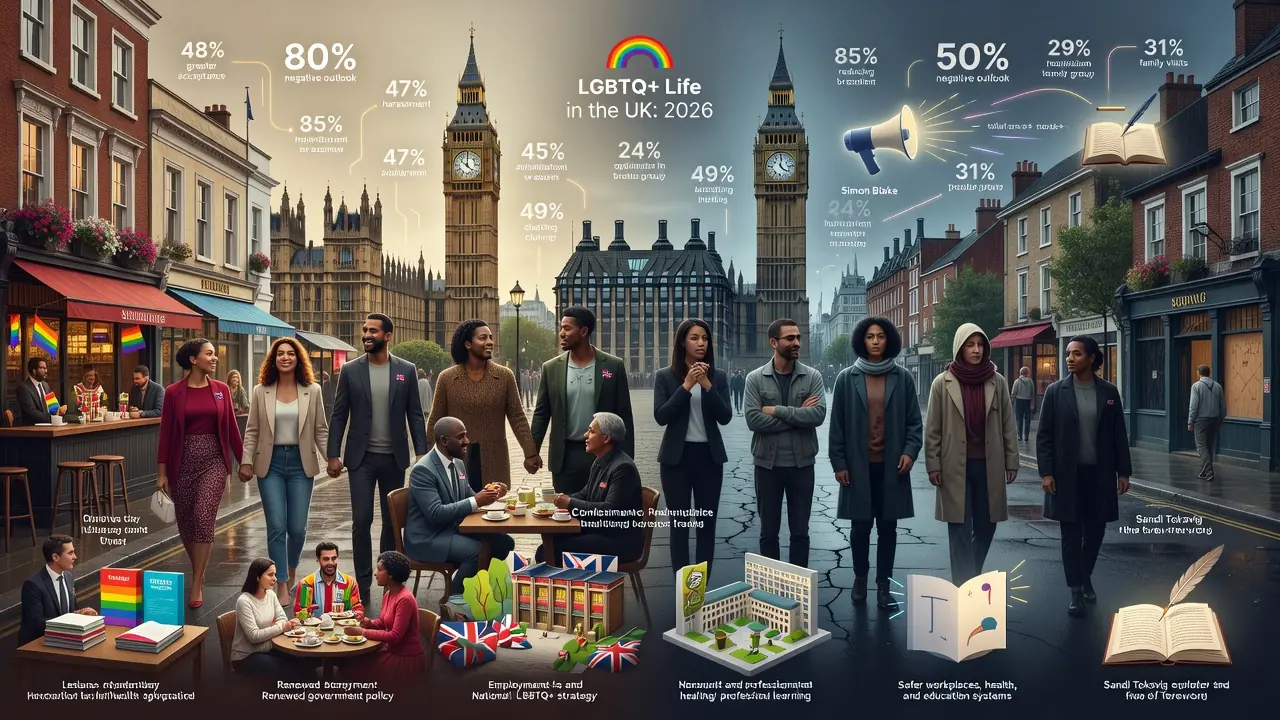
Stonewall, the UK-based LGBTQ+ advocacy organization, has released "LGBTQ+ Life in the UK: 2026," its first large-scale report in almost ten years. Drawing on responses from close to 3,500 lesbian, gay, bisexual, trans+ and queer people, the study maps shifts in acceptance, safety and daily life since the organization's last comparable report in 2018.
A mixed picture of progress and pessimism
The findings show a community divided on the trajectory of equality. Nearly half of respondents, 48%, say acceptance of LGBTQ+ people is greater than it was a decade ago. Yet only 24% describe themselves as optimistic about the future, while 50% say they are pessimistic. That pessimism is far more pronounced among trans+ respondents, 80% of whom report a negative outlook, according to the report.
Trans+ respondents report consistently worse outcomes
Across nearly every measure in the survey, trans+ participants reported harsher experiences than the broader LGBTQ+ sample. The report states that 45% of trans+ respondents experienced harassment, intimidation or assault of a potentially criminal nature in the past year. Other disparities include:
- 25% of LGBTQ+ respondents avoid certain bars or restaurants over safety concerns, rising to 47% among trans+ respondents.
- 23% of LGBTQ+ respondents alter how they dress in public to avoid discrimination or harassment, compared with 49% of trans+ respondents.
- 13% of LGBTQ+ respondents visit family less often due to feeling unaccepted, a figure that rises to 31% for trans+ respondents.
- Fewer than half of all respondents said they would feel comfortable holding a partner's hand in public.
Organizational response and calls for policy action
Stonewall's chief executive, Simon Blake, described the findings as a "wakeup call," arguing that progress toward equality has not translated into full acceptance, particularly for trans+ people. Blake called for renewed institutional trust-building, safer public and workplace spaces, and improved understanding within health and education systems. The organization is urging the UK government to fund a new national LGBTQ+ strategy developed in coordination with civil society and business groups.
Broadcaster Sandi Toksvig, who wrote the report's foreword, framed the data as a tool against complacency, stating that evidence-based reporting leaves less room for assumption than public debate often allows. The report's authors present the findings as a baseline for policy discussion rather than a conclusive measure of national sentiment, noting the survey reflects self-reported experiences from nearly 3,500 participants rather than a nationally representative census.